Cthulhu
Ringkasan
Cthulhu adalah entitas kosmik fiktif ciptaan H. P. Lovecraft dalam cerpen "The Call of Cthulhu" (1928), digambarkan sebagai makhluk raksasa berkepala bertentakel yang menunggu sambil bermimpi di R'lyeh.
Cthulhu is a fictional cosmic entity created by H. P. Lovecraft in the short story "The Call of Cthulhu" (1928), depicted as a gigantic being with a tentacled head who waits dreaming in R'lyeh.
Kisah dan tradisi
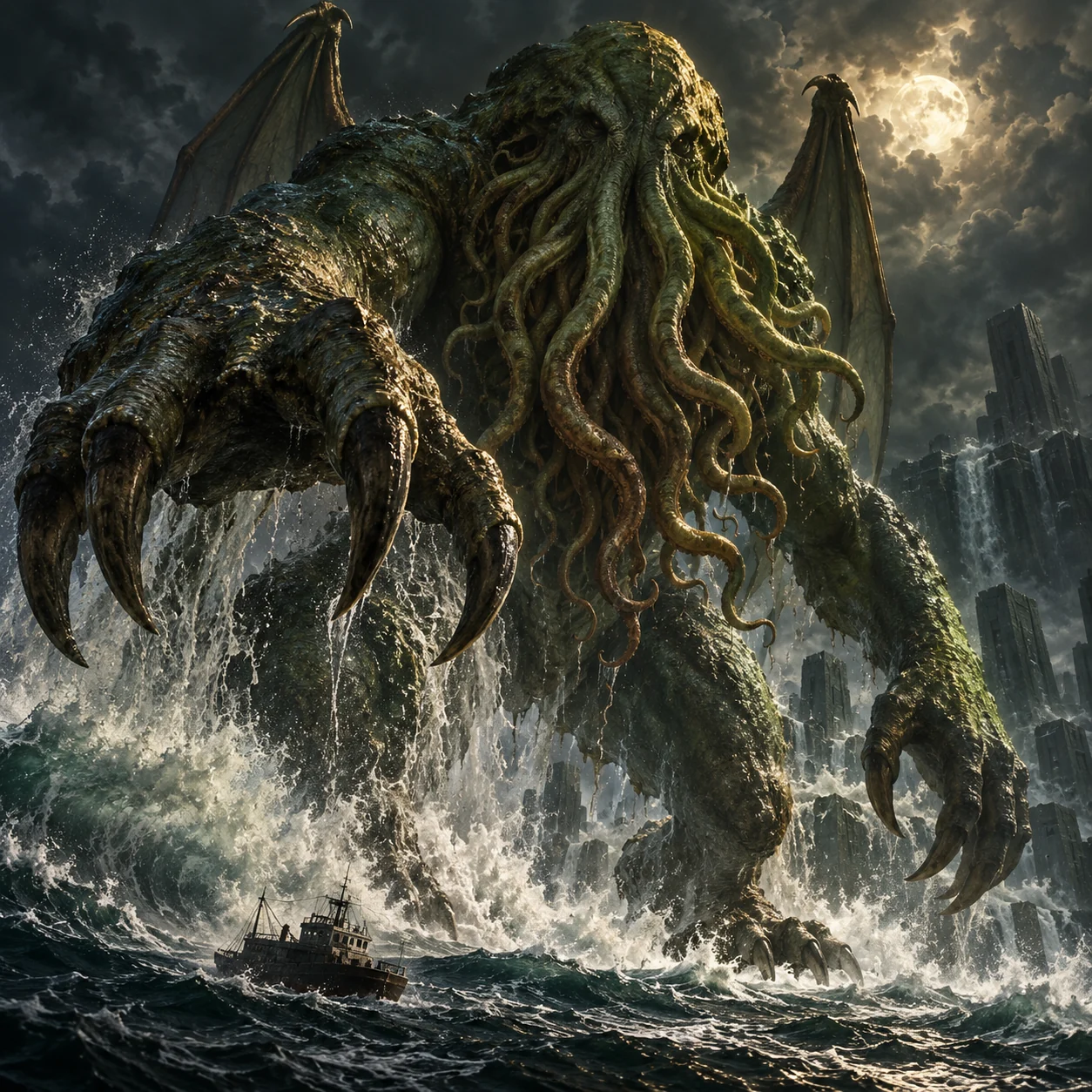
Cthulhu adalah tokoh sastra, bukan makhluk dari cerita rakyat atau agama. Ia diciptakan oleh H. P. Lovecraft dan diperkenalkan dalam cerpen "The Call of Cthulhu", yang terbit di majalah pulp Weird Tales pada 1928. Wikipedia menyebutnya Great Old One dan nama bagi Cthulhu Mythos, sedangkan peneliti Corbacho Carrobles menggolongkan gaya Lovecraft sebagai kengerian kosmik, bukan lagi Gotik, karena teror dalam kisahnya berasal dari entitas asing yang berada di luar pemahaman manusia. Dalam cerpen itu, patung kecil Cthulhu digambarkan sebagai monster berbentuk samar mirip manusia dengan kepala seperti gurita yang wajahnya berupa gumpalan sulur, tubuh bersisik dan berkesan seperti karet, cakar besar pada kaki depan dan belakang, serta sayap panjang yang sempit di belakang. Narator juga menyebut ukiran yang membuatnya membayangkan gurita, naga, dan karikatur manusia sekaligus, dengan kepala bertentakel yang gembung. Wikipedia menyebut ia digambarkan raksasa, ratusan meter tingginya, dalam wujud humanoid hijau yang memuat unsur gurita dan naga, sedangkan Corbacho Carrobles menyebutnya perpaduan ganjil dari berbagai konsep yang sulit digolongkan. Menurut cerita, para pemuja menyembah Great Old Ones yang hidup berabad-abad sebelum ada manusia dan datang dari langit. Mereka menyanyikan bahwa di rumahnya di R'lyeh, Cthulhu yang mati menunggu sambil bermimpi. Para Great Old Ones berbaring di rumah-rumah batu di kota R'lyeh, diawetkan oleh mantra Cthulhu yang perkasa sampai saat kebangkitan ketika bintang-bintang kembali tepat. Cthulhu juga disebut sebagai imam agung yang kelak akan bangkit dari rumahnya di kota di bawah air. Menurut Wikipedia, ia adalah makhluk jahat yang tidur di R'lyeh, kota bawah laut di Pasifik Selatan, dan dipuja oleh banyak kultus manusia serta makhluk lain seperti Deep Ones dan Mi-Go. Dalam cerita ditegaskan bahwa tidak ada manusia yang pernah melihat Great Old Ones, dan arca ukiran itu adalah Cthulhu. Dalam bagian akhir cerpen, Cthulhu terbangun dan, dalam kata-kata narator, "Benda itu tidak dapat dilukiskan" dan "sebuah gunung berjalan atau terhuyung". Setelah vigintillions tahun, ia lepas lagi, lalu meluncur ke air dan mengejar dengan ayunan besar yang menimbulkan gelombang. Johansen memacu kapalnya menabrak langsung makhluk itu; tubuhnya tercerai-berai, tetapi kemudian berkumpul kembali dalam wujud aslinya. Menurut Corbacho Carrobles, bagian ini menyingkap bahwa mimpi sang seniman bermula pada saat gempa dan badai membuat kota makam R'lyeh naik dari kedalaman. Setelah cerpen pertamanya, Cthulhu dirujuk dalam karya Lovecraft lain, termasuk novela At the Mountains of Madness (1931) yang menyebut "star-spawn of Cthulhu". August Derleth memakai namanya untuk menyebut sistem cerita Cthulhu Mythos dan menyusun kerangka tersendiri yang menempatkan Cthulhu sebagai salah satu Water Elementals yang bermusuhan dengan Hastur; Houellebecq mengkritik Derleth karena mengubah kelanjutan cerita Lovecraft yang sepenuhnya amoral menjadi pertentangan baik dan jahat yang stereotipikal.
Cthulhu is a literary character, not a figure of folklore or religion. He was created by H. P. Lovecraft and introduced in the short story "The Call of Cthulhu", published in the pulp magazine Weird Tales in 1928. Wikipedia calls him a Great Old One and the namesake of the Cthulhu Mythos, while the researcher Corbacho Carrobles describes Lovecraft's style as cosmic horror rather than Gothic, since the terror in his tales relates to alien entities from beyond human understanding. In the story, a small statue of Cthulhu is described as a monster of vaguely anthropoid outline with a head like an octopus whose face is a cluster of feelers, a scaly body that looks rubbery, enormous claws on its hind and front feet, and narrow wings at the back. The narrator also describes a carving that made him imagine an octopus, a dragon, and a human caricature at once, with a pulpy, tentacled head. Wikipedia says he is depicted as gigantic, hundreds of meters tall, in a green humanoid form incorporating elements of an octopus and a dragon, while Corbacho Carrobles calls him an odd blend of several concepts that resists easy definition or classification. According to the story, cultists worship the Great Old Ones, beings who existed ages before humanity and arrived from the sky. They chant that in his house at R'lyeh dead Cthulhu waits dreaming. The Great Old Ones lie in R'lyeh, their great city of stone houses, kept intact by mighty Cthulhu's spells until the stars are right again for a glorious resurrection. Cthulhu is also called the great priest who is to rise from his dark house in the city under the waters. According to Wikipedia, he is a malevolent entity hibernating in R'lyeh, an underwater city in the South Pacific, worshipped by many human cults and by other monsters such as the Deep Ones and the Mi-Go. The story stresses that no man had ever seen the Old Ones, and the carven idol was great Cthulhu. In the story's final section, Cthulhu awakens and, in the narrator's words, "The Thing can not be described" and "A mountain walked or stumbled". After vigintillions of years he is loose again, then slides into the water and pursues with vast wave-raising strokes. Johansen drives his vessel head on against the creature; its form is scattered but then nebulously recombines in its hateful original form. According to Corbacho Carrobles, this part reveals that the artist's dreams began at the very time earthquakes and storms made the ancient tomb city of R'lyeh arise from the depths. After his first story, Cthulhu is referred to in other Lovecraft works, including the novella At the Mountains of Madness (1931), which mentions the "star-spawn of Cthulhu". August Derleth used his name to identify the system of lore called the Cthulhu Mythos and proposed a scheme of his own that makes Cthulhu one of the Water Elementals in an age-old rivalry with Hastur; Houellebecq criticizes Derleth for reshaping Lovecraft's strictly amoral continuity into a stereotypical conflict between objective good and evil.
Konteks budaya
Menurut Corbacho Carrobles, monster dalam Cthulhu Mythos berasal dari luar waktu dan ruang dan selalu dipakai untuk melambangkan kerapuhan dan ketidakberartian umat manusia.
Corbacho Carrobles writes that the Mythos monsters originate outside time and space and always stand for humanity's frailty and insignificance.
Fakta utama
- Budaya / Culture
- Sastra Modern
- Kawasan / Region
- Transregional
- Era
- A literary character introduced in a short story published in the magazine Weird Tales in 1928.
- Klasifikasi / Classification
- Monster
- Habitat
- Water
- Kemampuan / Abilities
- Menyatu kembali, Menjangkau lewat mimpi, Mawas lama dan mantra pengawet
Nama lain / Alternate names
The Sleeper of R'lyeh, High Priest of the Great Old Ones, Tulu, Katulu, Kutulu
Tahukah kamu? / Did you know?
Menurut Wikipedia, beberapa organisme dinamai menurut Cthulhu, termasuk laba-laba California Pimoa cthulhu, ngengat Speiredonia cthulhui dari Papua Nugini, dan Sollasina cthulhu, echinodermata fosil.
Wikipedia notes organisms named for Cthulhu, among them a California spider (Pimoa cthulhu), a New Guinea moth (Speiredonia cthulhui), and a fossil echinoderm (Sollasina cthulhu).