Dragons in Greek mythology
Ringkasan
Naga (drakōn) berperan penting dalam mitologi Yunani dan menjadi asal kata "dragon"; umumnya ular besar yang lebih dikaitkan dengan ludah atau napas beracun.
Dragons (drakōn) play a significant role in Greek mythology and are the origin of the word "dragon"; they were generally large snakes tied more to poisonous spit or breath.
Kisah dan tradisi
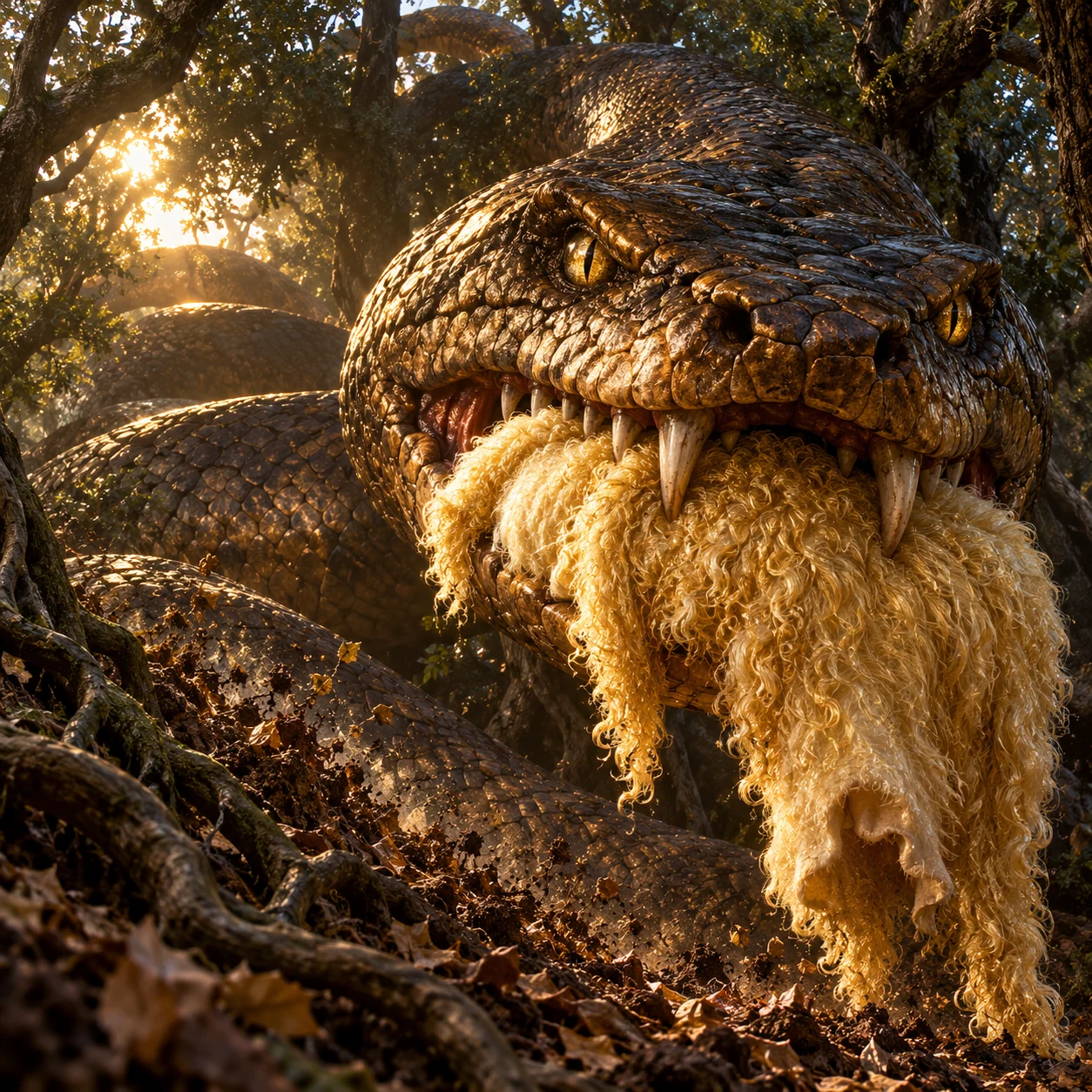
Naga berperan penting dalam mitologi Yunani. Drakōn Yunani sering berbeda dari naga Barat modern, tetapi menjadi asal istilah modern itu. Orang Yunani kuno memakai istilah tersebut untuk ular besar pembelit, dan drakōn jauh lebih dikaitkan dengan ludah atau napas beracun, meskipun napas berapi masih tercatat dalam beberapa mitos. Ada pula drakaina, bentuk betinanya, yang sering selamat dengan kawin dengan pahlawan atau menjadi leluhur garis keturunan penting. Delphyne, yang dalam beberapa mitos disebut sebagai naga itu, sering digambarkan setengah gadis dan setengah ular. Contoh yang terkenal adalah Ladon, ular berkepala seratus penjaga apel emas para Hesperides yang dibunuh Herakles, dan naga Kolkhis yang menjaga Bulu Domba Emas di hutan suci Ares. Naga Kolkhis itu dibunuh sang pahlawan atau ditidurkan Medea, dan dalam Pythian Ode 4 Pindar melukiskannya jauh melampaui panjang dan lebar kapal berdayung lima puluh.
Dragons play a significant role in Greek mythology. The Greek drakōn often differs from the modern Western dragon but is the origin of the modern term. Ancient Greeks applied the word to large constricting snakes, and the drakōn was far more tied to poisonous spit or breath, though fiery breath is still attested in a few myths. There is also the drakaina, the female form, which often survives by mating with a hero or by being the ancestress of an important lineage. Delphyne, the name some myths give the dragon, was often pictured as half girl and half snake. Famous examples are Ladon, the hundred-headed serpent guarding the golden apples of the Hesperides, slain by Herakles, and the Colchian dragon that guarded the Golden Fleece in the sacred grove of Ares. The Colchian dragon was either slain by the hero or put to sleep by Medea, and in Pindar's Pythian Ode 4 it far surpasses in length and breadth a ship of fifty oars.
Fakta utama
- Budaya / Culture
- Mitologi Yunani
- Kawasan / Region
- Eropa
- Klasifikasi / Classification
- Dragon
- Kemampuan / Abilities
- Ludah atau napas beracun