Roesschaert
Ringkasan
Roesschaert adalah roh pengganggu dan pengubah wujud dalam sage Blankenberge yang terutama mengganggu para nelayan.
Roesschaert was a tormenting, shapeshifting spirit in the legend of Blankenberge that pestered fishermen above all.
Kisah dan tradisi
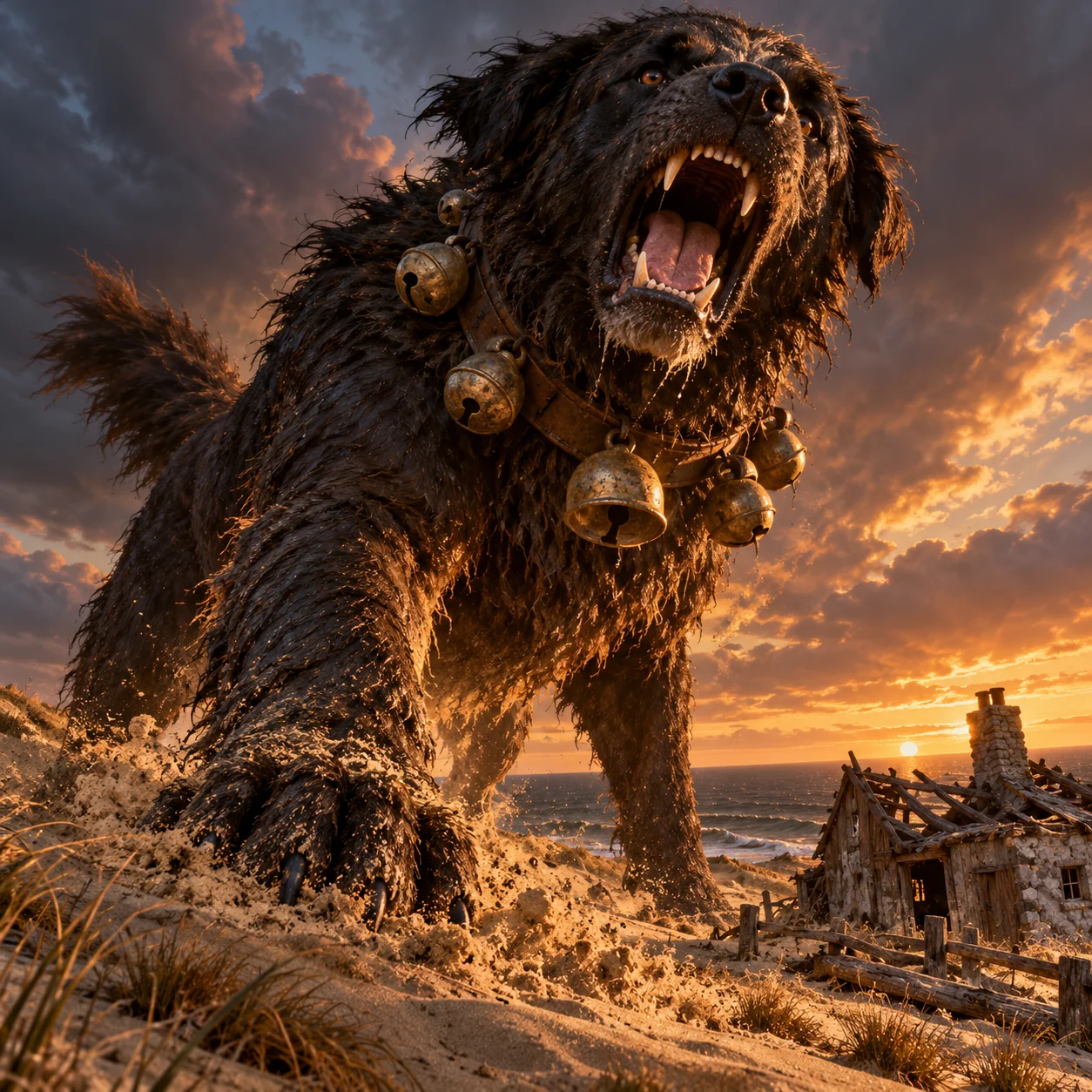
Dalam cerita rakyat kota pesisir Blankenberge, Roesschaert dikenal sebagai roh pengganggu (kwelgeest) yang gemar mengganggu masyarakat dan terkhusus para nelayan. Karakteristiknya menyerupai sosok Lange Wapper dari wilayah sungai Schelde yang kerap mengubah wujud untuk mencekik atau memperdaya manusia. Menurut sage itu, pada tahun-tahun 1700-an di tengah bukit pasir Blankenberge berdiri sebuah pondok reyot tempat tinggal seorang penyihir perempuan. Pada Februari 1791 badai dahsyat pecah dan pondok itu hancur seluruhnya; keesokan harinya di tempat itu berjalan seekor anjing berlonceng di lehernya yang makin besar sambil berteriak "roes, roes, roes", dan ia dinamai Roesschaert. Semua orang yakin penyihir itu telah menjelma binatang. Roesschaert menjelma menjadi kucing, keledai, anak, tong yang berjalan, dan sering seorang nelayan, sehingga tak seorang pun mengenalinya; satu-satunya kekurangannya, ia tidak bisa mengucapkan nama "God". Terutama para nelayan yang diganggunya dan sangat takut padanya saat berangkat melaut. Para nelayan Blankenberge dikatakan sejak dulu memakai nama julukan (lapnaam), dan sage mengaitkannya dengan Roesschaert. Untuk terbebas dari roh itu orang perlu mengganti nama dalam upacara baptis khusus, dengan nelayan tertua menghitamkan calon dan menyiramkan air laut ke wajahnya. Sebuah teks heemkunde menyebut roh itu iblis laut dan menggambarkan baptis nelayan magang dengan secangkir bir serta syair "Rosten, ik doop u", sambil menyebut anggapan bahwa nama julukan berasal dari lingkungan nelayan sebagai "fabeltje". Kebiasaan itu lenyap, tetapi nama julukan masih diwariskan dari ayah ke anak laki-laki.
In the folklore of Blankenberge, Roesschaert is remembered as a tormenting spirit targeting the local population and especially fishermen. The legend shares many resemblances with Lange Wapper of the Scheldt, who assumed varied guises to plague or choke travelers. According to the legend, in the 1700s a dilapidated cottage stood in the middle of the Blankenberge dunes where a sorceress lived. In February 1791 a violent storm broke out and the cottage was completely destroyed; the next day a dog with bells around its neck walked at the site, growing larger and shouting "roes, roes, roes", and it was named Roesschaert. Everyone was convinced the sorceress had turned into an animal. Roesschaert took the shape of a cat, a donkey, a child, a walking barrel, and often a fisherman, so that nobody could recognise him; his one shortcoming was that he could not pronounce the name "God". It was above all the fishermen he pestered, and they were very afraid of him when they went to sea. The fishermen of Blankenberge are said to have long used nicknames (lapnaam), which the legend ties to Roesschaert. To be freed of the spirit one had to change one's name in a special baptismal ceremony, in which the oldest fisherman blackened the candidate and threw seawater in his face; a local-history text calls the spirit a sea devil and describes the baptism of an apprentice fisherman with a small cup of beer and a verse beginning "Rosten, ik doop u", while calling the notion that nicknames came from the fishing milieu a "fabeltje". The custom disappeared, but the nicknames are still passed from father to son.
Konteks budaya
Menurut artikel sage itu, semua nelayan Blankenberge dahulu punya nama julukan (lapnoame) karena ulah Roesschaert, dan menurut teks heemkunde orang yang baru melaut dibaptis ulang agar roh itu tidak mengenalinya; nama julukan itu masih diwariskan walau upacaranya lenyap.
According to the legend article, all the fishermen of Blankenberge once had a nickname (lapnoame) because of Roesschaert, and according to a local-history text a newcomer to the sea was rebaptised so the spirit would not recognise him; the nicknames are still passed on although the ceremony disappeared.
Fakta utama
- Budaya / Culture
- Tradisi Belanda
- Kawasan / Region
- Eropa
- Klasifikasi / Classification
- Spirit
- Kemampuan / Abilities
- Berubah wujud
Tahukah kamu? / Did you know?
Sebuah teks heemkunde menyebut roh ini sebagai iblis laut (zeeduivel) atau iblis air (waterduivel), dan dalam versinya baptis nelayan magang memakai secangkir bir, bukan air laut.
A local-history text calls this spirit a sea devil (zeeduivel) or water devil (waterduivel), and in its version the baptism of an apprentice fisherman used a small cup of beer rather than seawater.