Sewer alligator
Ringkasan
Aligator saluran air adalah legenda urban tentang aligator yang dikatakan hidup di saluran air di luar wilayah aslinya, terutama New York City, meski tidak pernah terbukti.
The sewer alligator is an urban legend about alligators said to live in sewers outside their native range, above all in New York City, though never proven.
Kisah dan tradisi
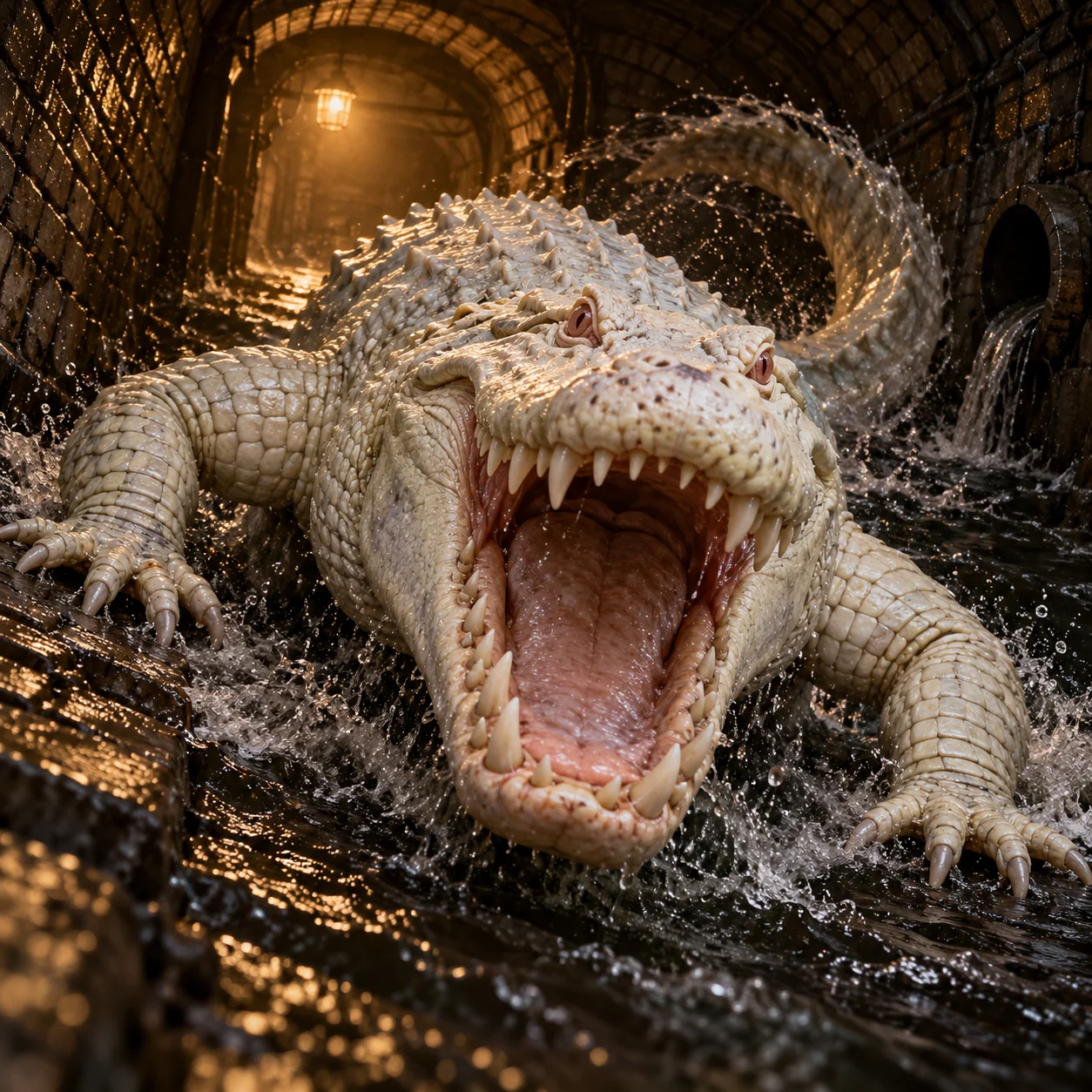
Aligator saluran air adalah legenda urban tentang aligator yang dikatakan hidup di saluran air di luar wilayah aslinya. Kota yang konon pernah menemukannya antara lain New York City dan Paris. Laporan tentang aligator dewasa tidak terbukti, tetapi aligator kecil kadang diselamatkan dari saluran, dan kisahnya berasal dari akhir 1920-an dan awal 1930-an. Menurut legenda, aligator menyusuri saluran New York City, memangsa tikus dan sampah, dan mengancam pekerja saluran yang konon membawa senjata api. Mereka sering digambarkan besar dan buas, kadang disebut albino, buta, dan putih, atau bahkan mutan akibat limbah kimia. Asal-usulnya sering dikaitkan dengan bayi aligator yang dibeli turis sebagai suvenir dari Florida lalu dibuang ke toilet; teori yang paling masuk akal menyebut orang tua membuang aligator yang dibeli untuk anak-anak mereka. Pada 10 Februari 1935 New York Times memuat laporan bahwa beberapa remaja menyeret aligator hidup sepanjang delapan kaki keluar dari saluran air di Harlem; warga menduga hewan itu jatuh dari perahu di Sungai Harlem. Menurut buku The World Beneath the City (1959), mantan pengawas saluran Teddy May mengaku melihat koloni aligator sepanjang sekitar dua kaki dan memerintahkan pemusnahannya. Setelah laporan 1930-an, kisahnya berkembang selama puluhan tahun menjadi legenda kontemporer. Kenyataannya, aligator yang kabur atau dibuang hanya mungkin bertahan sebentar di saluran New York, sebab saluran terlalu dingin dan mengandung bakteri berbahaya dari limbah; pekerja saluran mengatakan tidak ada populasi tersembunyi. Legenda ini muncul dalam film Alligator (1980), yang menampilkan aligator mutan raksasa.
The sewer alligator is an urban legend about alligators said to live in sewers outside their native range. Cities where they have supposedly been found include New York City and Paris. Reports of full-grown sewer alligators are unproven, though small alligators are sometimes rescued from sewers, and the stories date to the late 1920s and early 1930s. In the legend, alligators roam New York City's sewers, preying on rats and refuse and threatening sewer workers who are said to carry firearms. They are often described as large and vicious, sometimes as albino, blind, and white, or even as mutants from chemical waste. The origin is often linked to baby alligators that tourists bought as souvenirs in Florida and then flushed down the toilet; the most plausible theory has parents dumping alligators bought for their children. On February 10, 1935, the New York Times carried a report that teenagers dragged a live eight-foot alligator out of a Harlem sewer; locals speculated that the animal had fallen from a boat in the Harlem River. According to the book The World Beneath the City (1959), former sewer superintendent Teddy May said he saw alligators averaging about two feet long and ordered their extermination. After the reports of the 1930s, the story built up over the decades into a contemporary legend. In reality escaped or abandoned alligators can survive only briefly in New York's sewers, which are too cold and contain harmful bacteria from waste; sewer workers say there is no hidden population. The legend appears in the 1980 film Alligator, which features a gigantic mutant alligator.
Fakta utama
- Budaya / Culture
- Tradisi Amerika Serikat
- Kawasan / Region
- Amerika Utara Pribumi
- Negara / Country
- United States
- Era
- Stories date back to the late 1920s and early 1930s
- Klasifikasi / Classification
- Legendary Creature
Tahukah kamu? / Did you know?
Kota New York menyelamatkan beberapa aligator setiap tahun, sebagian diambil langsung dari rumah tempat orang memeliharanya secara ilegal.
New York City rescues several alligators each year, some taken directly from homes where people keep them illegally.