Forest spirits (Polish mythology)
Ringkasan
Roh hutan dalam mitologi Polandia, seperti borowy, boruta, dan leśny duch, bisa tak terlihat atau berwujud hewan, menyesatkan orang di hutan tetapi kadang juga menolong.
The forest spirits of Polish mythology, such as borowy, boruta and leśny duch, could be invisible or take animal form, leading people astray in the forest but sometimes helping them.
Kisah dan tradisi
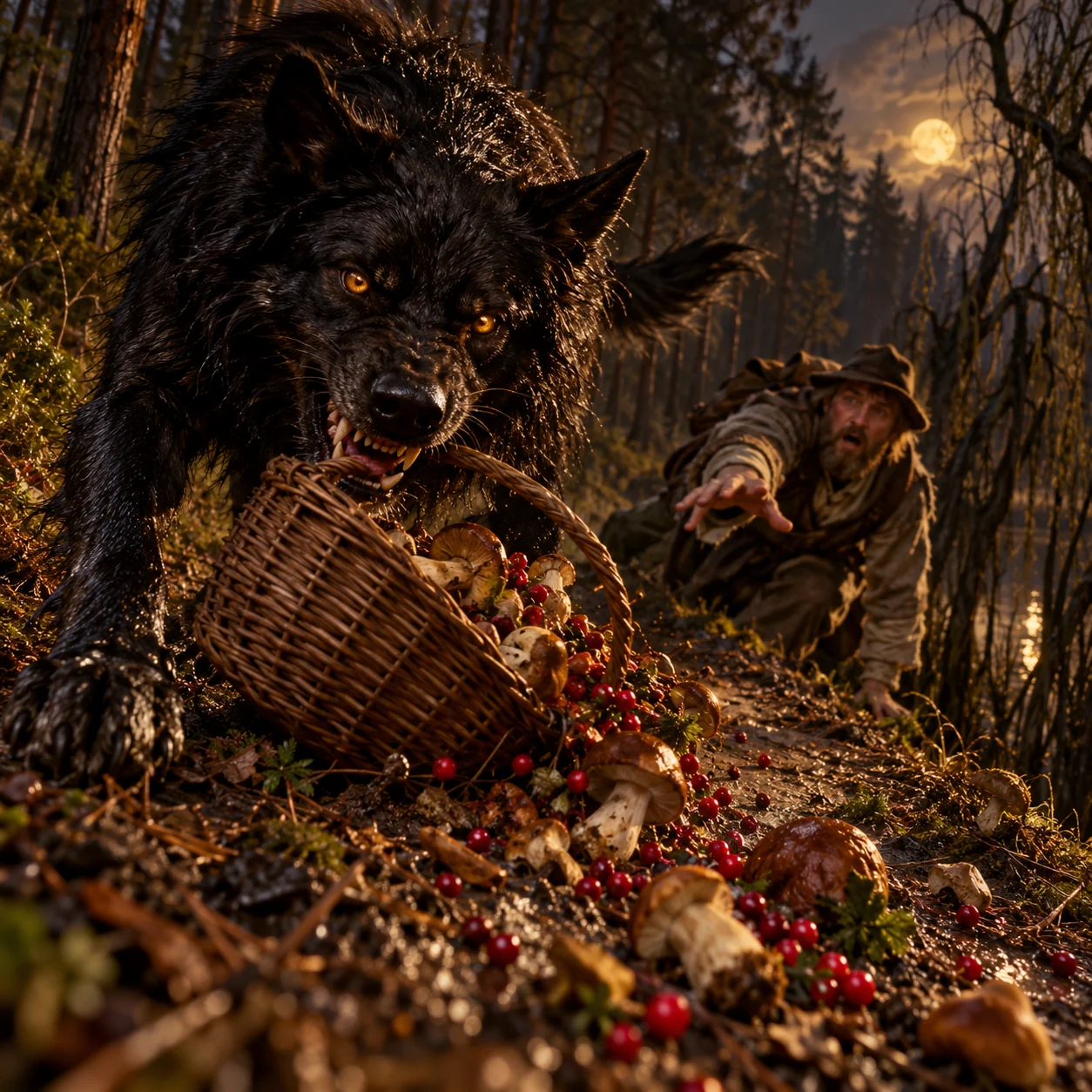
Roh hutan dalam mitologi Polandia dikenal dengan banyak nama, antara lain borowiec, borowik, borowy, dan boruta dari kata "bór", serta leśnik, leśny duch, dan leśny dziad dari kata "las". Menurut berbagai sumber, mereka bisa tak terlihat atau muncul sebagai hewan hutan seperti burung hantu, rusa, beruang, atau babi hutan, maupun hewan ternak seperti kucing, kuda, dan anjing hitam. Mereka menakut-nakuti orang pada malam hari di hutan dan bendungan, menyesatkan mereka, menumpahkan jamur dan buah beri dari keranjang, dan menculik gadis untuk dijadikan istri. Namun mereka juga bisa menuntun orang keluar dari hutan dan memberi hadiah kepada orang yang disukai. Roh-roh ini punya beberapa kemiripan dengan leshy Slavia Timur, roh hutan Slavia yang paling terdokumentasi. Pada bangsa Slavia Barat, peran pelindung hewan hutan dan pemburu kemudian beralih kepada Santo Hubertus, dan peran pelindung dari serigala kepada Santo Nikolaus. Sebuah ensiklopedia Polandia lama mencatat bahwa rakyat desa masih mengenal roh jahat atau iblis hutan yang disebut borowy, leśny, borowiec, atau borowik. Karena bunyinya mirip kata bór, nama manusia Boruta dipindahkan kepada iblis ini, yang tinggal di hutan, semak, dan pohon dedalu kering. Kisah tentang Boruta yang menakut-nakuti orang pada malam hari di tanggul dan hutan, menyesatkan mereka, dan kadang muncul sebagai anjing hitam beredar di seluruh negeri. Menurut ensiklopedia itu, gambaran Boruta berpakaian kontusz bukan berasal dari rakyat, melainkan dari sebagian sastrawan Polandia pada paruh pertama abad ke-19 yang menambahkannya demi efek legenda cetakan mereka.
Forest spirits in Polish mythology are known by many names, including borowiec, borowik, borowy and boruta from "bór", and leśnik, leśny duch and leśny dziad from "las". According to various sources they could be invisible or appear as forest animals such as owls, deer, bears or boars, or as domestic animals such as cats, horses and black dogs. They frightened people at night in forests and on dams, led them astray, spilled mushrooms and berries from their baskets and abducted girls as wives. Yet they could also guide people out of the forest and reward those they liked. These spirits share some similarities with the East Slavic leshy, the best documented Slavic forest spirit. Among the West Slavs, the role of protector of forest animals and hunters later passed to Saint Hubert, and that of protector against wolves to Saint Nicholas. An old Polish encyclopedia records that country folk still knew an evil forest spirit or devil called borowy, leśny, borowiec or borowik. Because of its similarity to the word bór, the human name Boruta was transferred to this devil, who lived in forests, thickets and dry willows. Tales of Boruta frightening people at night on dykes and in forests, leading them astray and sometimes appearing as a black dog circulated throughout the country. According to that encyclopedia, the image of Boruta dressed in a kontusz did not come from the people but from some Polish writers in the first half of the 19th century, who added it for effect in their printed legends.
Fakta utama
- Budaya / Culture
- Tradisi Polandia
- Kawasan / Region
- Eropa
- Klasifikasi / Classification
- Spirit
- Habitat
- Forest
Nama lain / Alternate names
borowy, boruta, leśny duch, leśny dziad, borowiec
Tahukah kamu? / Did you know?
Peran roh hutan sebagai pelindung pemburu pada bangsa Slavia Barat beralih kepada Santo Hubertus.
Among the West Slavs, the forest spirits' role as protector of hunters passed to Saint Hubert.